How to reduce no-shows at your padel club without upsetting players
PadelEco Team
Padel club operations
5 min read
On this page
- Why do players skip padel court bookings?
- What does a no-show really cost a club?
- What happened when Hong Kong made no-shows stop being free?
- Should a padel club require a deposit or prepayment?
- What cancellation policy works for a padel club?
- Do reminders reduce no-shows?
- How should a club handle repeat no-shows?
- Frequently asked questions
Why do players skip padel court bookings?
Most no-shows fall into two groups:
- They forgot. The booking was made days ago, plans changed, and nothing reminded them.
- Skipping cost them nothing. The court was free to cancel at any time, or not paid in advance, so there was no reason to cancel properly or turn up.
A third cause is easy to miss: a rule that quietly rewards not showing up. If an unclaimed court can be taken over for free, or a no-show never has any consequence, some players will learn to book loosely. The Hong Kong example below shows how big that effect can be.
Padel adds its own twist. Most matches are doubles, so one no-show can cancel the game for three other players, not just leave a court empty.
What does a no-show really cost a club?
A no-show costs the court-hour you could have sold to someone else, and in a class it can cost a coach's hour too. You can put a monthly figure on it:
No-show rate = no-shows ÷ total bookings × 100
Monthly cost ≈ no-shows × average price per court-hour
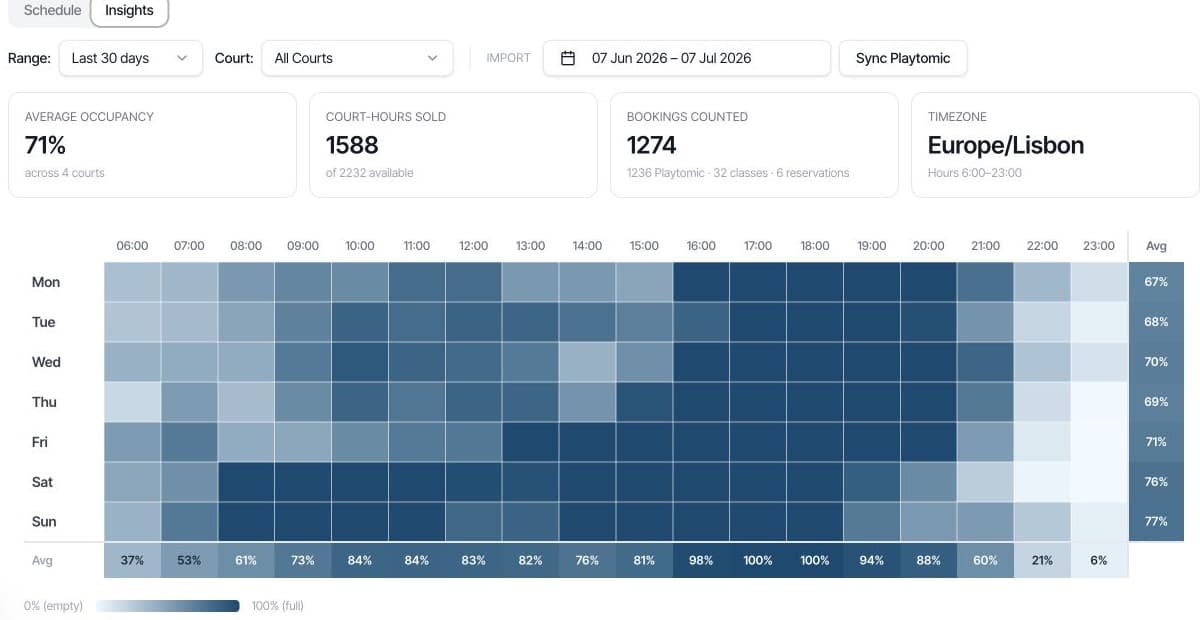
The cost figure is an upper bound. It assumes someone else would have booked the slot, which is more likely at peak times than on a quiet weekday morning. Track both numbers for four to eight weeks, and break them down by weekday, time slot, and booking type, such as open bookings, classes, and private lessons. No-shows are rarely spread evenly, and a pattern tells you where to act first.
Count late cancellations separately from no-shows. Both leave a court empty, but they need different fixes.
What happened when Hong Kong made no-shows stop being free?
Hong Kong's Leisure and Cultural Services Department ran into this on its public turf football pitches. Under a "standby" rule, if the person who booked a session had not claimed it within 10 minutes of the start, people waiting on site could use the pitch for free.
In July to September 2011, the average no-show rate was 31% on natural turf pitches and 37% on artificial turf. Standby users took over 85% and 87% of those no-show sessions. The department said the combination raised concerns that the standby rule was being abused.
The department cancelled the standby rule on a trial basis from 18 June 2013, then kept the change. According to its December 2013 press release:
| Turf pitch type | No-show rate, Jul–Sep 2011 | No-show rate, 18 Jun–Oct 2013 | Vacancy rate, 2011 | Vacancy rate, 2013 |
|---|---|---|---|---|
| Natural turf | 31% | 4.7% | 4.4% | 4.7% |
| Artificial turf | 37% | 5.6% | 4.7% | 5.6% |
No-shows fell sharply, and the share of sessions left unused barely changed.
These are public football pitches, not padel courts, so treat the numbers as a direction rather than a benchmark. The lesson carries over directly: before adding penalties, look for anything in your own rules that makes skipping a booking free or even convenient.
Should a padel club require a deposit or prepayment?
Financial commitment at the moment of booking is the strongest lever you have. When cancelling late has a cost, players who are unsure either turn up or cancel early enough for someone else to take the court.
Common options, from strictest to lightest:
- Full prepayment when the court is booked
- A partial deposit, kept for late cancellations and no-shows
- Prepayment only for the slots where your data shows no-shows cluster
Many clubs keep lighter rules for members and long-standing regulars, who have a track record, and apply prepayment to new or occasional players.
Rules on deposits and cancellation fees depend on your country's consumer law and your payment provider's terms. Write the policy into your booking terms, show it before payment, and check local requirements rather than treating this as legal advice.
What cancellation policy works for a padel club?
A policy only changes behaviour if it is specific and players see it before they book:
- Free cancellation up to a fixed deadline, for example 12 or 24 hours before the slot
- A clear consequence after that deadline, such as losing the deposit
- The policy shown at the moment of booking, not only on a terms page
"Please cancel in advance" does not change behaviour. A deadline with a consequence does.
Make it easy to do the right thing as well. Let players swap in a replacement for their spot, and when a court frees up in time, tell the players most likely to want it: a waitlist, or a message to your regular players' group. A cancellation only saves the slot if someone else hears about it.
Do reminders reduce no-shows?
Reminders deal with the "I forgot" group, which no deposit can fix. Two reminders cover most cases: one the day before, so players can still cancel inside your free window, and one shortly before the start.
Send them where your players actually read messages. For many clubs that is WhatsApp rather than email.
Reminders do not help with players who simply choose not to come. Combine them with a deadline and a deposit for that group.
How should a club handle repeat no-shows?
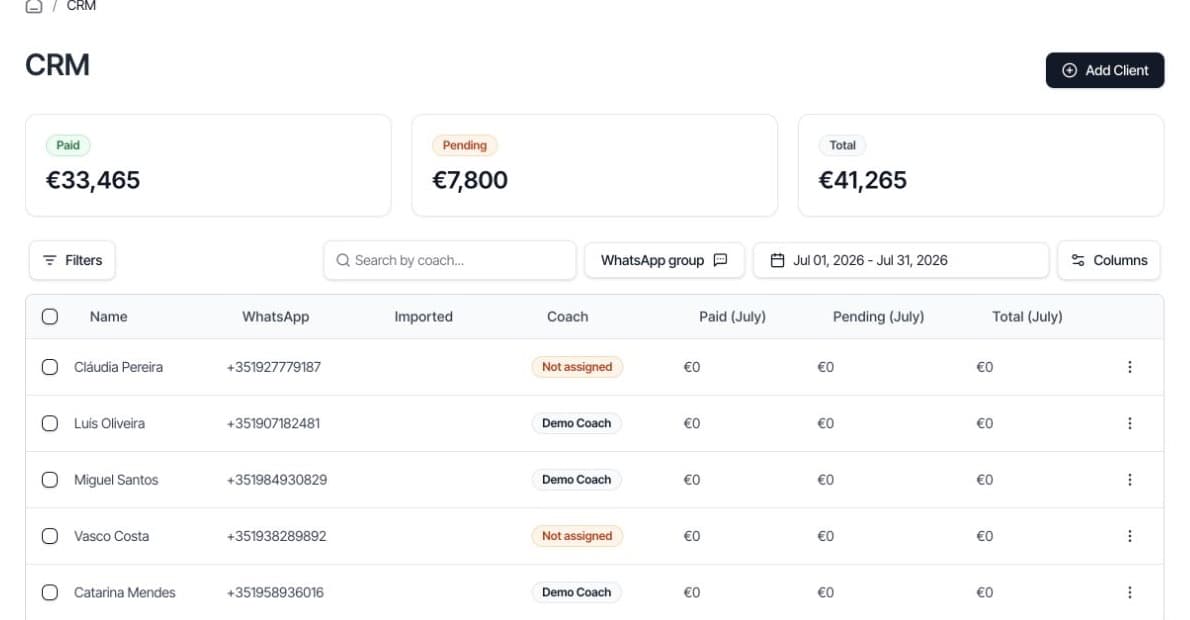
Check whether a few players account for most of your no-shows. If they do, targeted rules work better than tightening the policy for everyone. An escalating approach keeps it fair:
- First no-show: a friendly message that restates the policy
- Second no-show: prepayment required for future bookings
- A repeated pattern: a temporary booking restriction, reviewed by a staff member
Keep the tone neutral and the rules the same for everyone. Players accept consequences far more readily when they saw the policy before they booked and it is applied consistently.
Frequently asked questions
What is a reasonable no-show rate for a padel club?
There is no published padel benchmark. Measure your own rate for four to eight weeks and track the trend. As a direction, Hong Kong's public football pitches dropped from 31–37% no-shows to around 5% once skipping a booking stopped being free.
Can a padel club charge for a no-show?
Often yes, if the fee or deposit was clearly stated and accepted at the time of booking. What is allowed depends on your country's consumer rules and your payment provider's terms, so check local requirements before introducing fees.
Do reminders alone solve no-shows?
No. Reminders fix forgetting, but not players who choose not to come because skipping costs nothing. Reminders work best alongside a clear cancellation deadline and a deposit.
Should members and regular players have the same no-show rules?
The policy itself should be the same for everyone, but many clubs give members and reliable regulars lighter commitment rules, such as no prepayment, and tighten them only for players who repeatedly miss bookings.